Thursday, September 1, 2011

Fundraising for Non Profit gets Creative in a Recession Year


Almost never have people involved in fundraising for non profit organizations seem a time like the one we live in today. For as long as anyone can remember, American businesses and private citizens have always been generous in the way they supported nonprofits for what they favored. Each year that fundraisers have tried to raise money so far has without exception been better than the year that came before. Fundraisers remember how in the mid-80s, nonprofits experienced some terrible years. They thought they had left all that behind them until the financial crisis of 2008 arrived. Donations actually dropped 3% that year. After a couple of years living on donations that have been smaller and less generous, nearly 10% of the country's nonprofits risk shutting down this year. Volunteers who give their time to help raise funds for nonprofits have been growing desperate. Clearly, they can't spread out and ask for people for their generosity; that has clearly proven to not work. Instead, they are turning to finding ways to persuade existing donors to be more generous. They are branching out internationally and trying new ways - such as micro-donations instead of large ones for fewer people. Facebook fundraising for nonprofit is the latest thing. Things are finally beginning to look up now for the nonprofits; but they still have a long way to go.


One of the newer areas that fundraisers are looking at these days to make up for lost income is telemarketing. They just hire telemarketing agencies to do their cold calling and soliciting for them. Which happens to be a real shame; because the telemarketers come at a real cost. They get to keep 60 cents for every dollar they raise for the nonprofit. Of course, the nonprofits can't really mention this in their literature - it would look really awful. So they just try to hide this on their balance sheets by calling it something unexpected - like calling it program costs.


Fundraising for nonprofit can be kind of a science. While cold calling certainly is no science, a part of what fundraising volunteers do involves poring over databases to try to find out who the high net worth individuals are to approach. They buy these databases from firms that put them together based on who the high-rollers are. Anyone who owns a yacht, who owns a large parcel of real estate - these are the people usually feature on these databases. This practice does raise a few privacy issues too. But you have to understand that they do it for a good cause.


Other more regular methods of fundraising by nonprofit groups have recently come under criticism too. For instance, the good old box rattling method, where volunteers stand around traffic intersections asking motorists for a donation, while it can be very successful, can endanger the lives of overzealous volunteers when they venture out into traffic. In some places, methods as simple and as well-known as bake sales have come under criticism - for making kids fat.


Of course, there is no way to go about doing something as tough as funding a good cause, without doing anything controversial at all. Especially when times are as rough as they are today.

Have An Accident At Work?


Bad things happen in the workplace all the time. At times these are minor things that can be cleared up, but sometimes lives are changed forever. Whatever the case, no one is immune from an accident at work. No workplace is 100% safe. Some occupations are obviously more hazardous than others, but anyone could get hurt at work at any time. Do you know what to do if this were to happen to you? Some people don't know, and they blindly do what they are told afterward, which can mean you don't get the help or compensation that you deserve.


At the very least, you should be compensated for your lost wages and any medical bills you incur after an accident at work. This means you still get paid even though you can not work at that time, and if you have to see a doctor for your condition or injury, that should be covered by the company. Many workers are not aware that these basic things are due to them. You should be giving information when you start at any job. At the very least, if something happens and you go to a doctor, be sure to mention that it happened at work so there is no question later about any appointment.


A bad accident at work is not as common a as minor one, but they do happen. Hopefully you work for a company that will take care of you like they should, but this does not always happen. In fact, you never know what will happen if you get hurt. You should always keep a journal of what happened and what goes on each day, just in case you need it. Keep track of how you feel, your doctor's appointments, what is said to you by anyone in your company, and anything else that happens in regards to your accident.


One thing that should never happen after an accident at work is your dismissal. If you get fired because you got hurt at work and have to take doctor ordered time off, you have cause to find a lawyer right away. Though the rules on work place accidents may vary from state to state, you should have legal rights to keep your job until or if it is deemed that you can not work any longer for medical reasons. A lawyer may seem extreme, but if your life is changed, you have the right to be compensated for it. If the accident was due to negligence on their part, they may fire you to try to get rid of the problem. Don't let them get away with it.


Hopefully, you'll never have an accident at work, and if you do, hopefully your company will take care of you as they should. Just remember that it does not always happen that way. As long as you have made it clear from the start that this injury happened at work, and as long as you have kept track of events, you should have no trouble getting what is due you, even if you have to hire a lawyer to get it. Many will work for you with no fee until they recover money for you, so don't think you can't afford to call someone if you need assistance.


Buyer Beware: Does it Matter where you get your Credit Score?


For the most part, credit reports are completely free, while credit scores, those numbers that reflect all the goings-on on your credit reports, cost you about $15. Now most consumers aren't too happy paying this (note the popularity of the “free credit score” search on any search engine); but they still do. It gives them an important bit of insight into their financial future. If you've been one of those people who have always resented what you have to pay to get your credit score, you’ll be happy to know that you are not alone. There is a lawsuit that's been mounted that claims that people aren't getting their money's worth when they get a credit score.


Here's the thing: while there used to be just about four or five websites where you could get your credit score even a few years ago, today there are 25 (it would appear there are lots of businesses that have realized that getting people to pay $20 for practically no effort the business has to expend can be fun). Mention credit scores to any ordinary person they tend to think that it’s a single number - something you can't argue with. That isn't really true though; these 25 websites sell from a mix of seven different credit scores, each one calculated on a different formula of loan applications, credit applications and so on. The lawsuit mentioned before goes to how some companies try to sell you a credit score without telling you what exactly you’ll be getting.


The lawsuit (filed in California), is against Experian (or at least the credit score subsidiary of the credit reporting company) for how they allegedly try to deceive consumers. When you pay $15 to buy a PLUS score from them, they tell you that what you're getting is the credit score that lenders use to make up their minds whether you are worth their trust in the matter of a loan. And yet, if you put on your reading glasses (or at least magnify the font on your computer screen) and trace your finger through the interminable fine print, they claim that what they're selling you this score just for your own use; because they don't sell this for to lenders anymore. In short, here is Experian engaging in doubletalk for a few dollars.


The truth is, apparently, that lenders don't go by the credit score sold by any one (or two) companies. They go by hundreds of credit score calculating models that they have access to. And anyway, if you do want any one credit score to represent accurately (more or less) to you what the lenders try to look at, you'd be best off going by the FICO score (designed by the Fair Isaac Corporation).


So basically, when you get your credit score with any company that tries to sell you anything other than a FICO score, it is a purely imaginary number. And it's not worth your money. The difference between these scores can be no more than 50 points give or take. But that's all it takes to lose out on a lender’s favor.


Do you really Own that PS3 and the other Cool Electronic Gadgets you Own?


Buy a car, and no matter how high-tech it is, no one asks you to treat the car's internal design as some kind of intellectual property that doesn't belong to you. You are completely free to take it apart and modify it as you will. Buy one of several kinds of cool electronic gadgets, a videogame console, a smartphone, and the most you are allowed to do with it legally, is to use it for the purpose intended. Earlier this year Sony took hardware hackers to court - people like George Hotz - who published tips and tricks on a website on how to jailbreak the PlayStation 3 and play unauthorized games on the device. And Sony won. And then, they took the entire Fail0verflow hacker collective to court, all hundred hackers, for retrieving and publishing security codes that would allow anyone to run any kind of software (not just games) on the PlayStation. At first, the hackers involved were confident that radically restricted personal freedoms such as what is this lawsuit asks for would never get anywhere, especially in America (and especially when the courts allowed this kind of thing with smartphones). The big surprise was that not only did Sony win against all of these people, they are now asking to be compensated for whatever money they lost in game sales when people read those tips and tricks and stopped buying titles for the PlayStation 3.


Why do manufacturers want to keep you out of the cool electronic gadgets you paid good money to own? And if it's such a terrible blow to a company to have hackers do with their machines as they will, why do some other companies welcome having their products jailbroken by tech savvy enthusiasts? For instance, the same Sony that wants to keep you out of its PS3 wants very badly to have the developer community take control of its Move game controller. And Microsoft has opened up its Kinect motion sensing gaming controller device to developers as well. Of course, this isn't about anyone hacking into these devices. These companies are just opening their products up for third-party development.


And there are all kinds of wonderful new ways in which these cool electronic gadgets are being repurposed by developers. Take what researchers at a certain British University did to the Kinect, when they were allowed to mess with new kinds of software for it. They turned it into a sensor for a robot that they intended to use in dangerous places for rescue work. Their old robot couldn't even sense the space it was in a 3-D. And its sensor cost thousands of dollars. The robot equipped with a Kinect as its eyes is remarkably cheaper.


So is it fair for the manufacturers of these cool lelectronic gadgets to sometimes keep you out of the device you paid money to buy? The thing is, you only technically own the gadgets you buy. You might own the physical hardware; but the software that makes it run - the firmware, the basic operating system and everything that you use to repurpose the device or to run new software on it - belongs to the company. And the company doesn't want anyone doing anything with its software that could cost it in profits. Technically, it's a sound argument, even if intuitively, it might make little sense. Sony claims that if they allow people to make their own changes to the firmware, games played on the PS3 could conceivably be compromised and allow certain people to win by default. Those kinds of piracy situations would make video games in general, less enjoyable, they say.


Your Health Concerns


Don't make a mistake that could cost you your life. Everyone hates to take time out of their lives to go to a doctor, but if you don't go when you feel something is wrong, you could be taking your life into your own hands. Leaving your health concerns up to chance, or even worse, up to bad advice found online can have serious ramifications. Always think of your body as the one thing that will always be yours, and something that deserve attention when something feels off. You know your own body, and you know when something feels wrong, so take action when you know you should.


Your health concerns are things that often have little to no meaning at first, but some things are very sudden and very obvious. If you are short of breath, have sharp pains that come out of no where, or if you are feeling like you are going to pass out, don't waste your time wondering what is going on or searching the Internet for advice. Call for emergency help at once. You could be unable to make that call within minutes. Never mess with serious health concerns. You may go in and nothing is wrong, but when it comes to your life, it is far better to be wrong than to be dead.


For other health concerns, you may notice that there are subtle changes that affect how your body works and how you feel each day. You can look online for ideas, but remember that no article online can diagnose or heal you. You can find out what may be going on, but the final say is with your doctor. The symptoms of conditions like diabetes, Fibromyalgia, gout, and other serious but manageable conditions can be found online, but use them as a guide when you have health concerns. Do not try to treat yourself or you could cause serious damage to your health.


The same can be said for health concerns you have about your children, your spouse, your friends, or your family members. If you see something going on, there is great information online that may point to a few different things. You can use this to see if you think a visit to the doctor is in order, but don't take any action based on what you have found. You can think about your health concerns, look up information, and then print it out to share with the person of concern so that they can then decide that they may need to go in to see someone. They won't always, of course, but at least you have tried.


There are a lot of medical conditions that start off with very subtle signs and then become serious. The sooner you get in to see your doctor the sooner you can begin to understand your health concerns and what you can do to get better. Early detection is often the key to stopping and even curing some terminal illnesses. For those that have no cure, early intervention means a chance to prolong life and even better the quality of life. Some things are not serious unless they are ignored for a long time. Bring your health concerns to those that can help so you can remain happy and healthy for as long as possible.


Tuesday, July 26, 2011

3 Christian Movies that you can Watch on Easter


If you have no celebrations lined up this Easter holiday, why don’t you get some Christian movies and organize a mini theater in your house. You can invite a few friends, though they may not show up if they have other plans, or you can just grab your packet of popcorns and a soda, and enjoy your viewing. Get films that rhyme with the theme and give you a chance to experience the Easter mood even though you do not have anything major lined up.


Top on this list is The Last Temptation of Christ. This 1988 film portrays the life of Jesus when He was in the world until His crucifixion. It details the main activities in His life as a preacher. Performing the miracles and even the betrayal by Judas Iscariot, who in this case is a member of a group that plans to overthrow the leadership. However, remember that this film by Martin Scorsese does not depict the story of Jesus, as we know it, and it might leave you with some questions if you question the facts. For instance, when Jesus is on the cross at Golgotha, a young girl appears to Him to illustrate that Jesus talked to a Heavenly spirit before He died. This 163 minute long film will captivate you with the ability of the actors and the creative plot.


Your movie night is not complete without something from Mel Gibson. “The Passion of the Christ” will keep you mesmerized and on your toes as the plot unfolds. This film shows that good triumphs over evil because Jesus resurrects and Satan wails because of this eventuality. The quality of the film, acting and the plot will keep you mesmerized and you might decide to watch it a second and third time. Such Christian movies are inspiring and they serve as a remainder that Christianity is still vibrant because the Savior did not rot in the underworld but instead resurrected into a better place.


In addition, to give you an overview about the tribulations of preachers and their families, “A man called Peter” is one of the films you should include in your line up. It does not follow the Easter theme but it will enlighten you about the work of missionaries more so in the early years. This film is a life recollection as told by a preacher’s wife. Catherine Marshall wrote about the life of her husband Peter Marshall. It gives an intriguing and inspiring look at the life of this immigrant as he tried to etch a living up to the point where he became one of the popular reverends in the country.


If you are looking for inspiration during this reflective period of Easter, this movie will give you the urge to go on as it recaps the experiences of the young minister in a native church until the point where he became a chaplain in the U.S senate. The variety of Christian movies you can include in your Easter ‘moviethon’ is wide.


Sunday, July 17, 2011

Wireless Stereo Speakers

If you haven't Tried Wireless Stereo Speakers Yet...Finding Cell Phone Deals
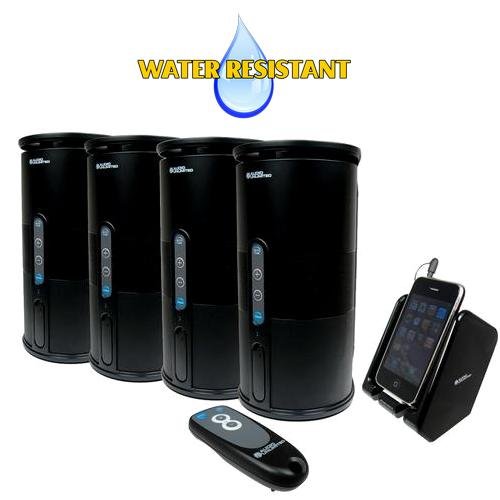
Audio Unlimited SPK
-Audio Unlimited SPK-VELO-4KIT2 Premium 900MHz Wireless Indoor/Outdoor 4 Speaker System with Remote and Dual Power Transmitter

Do you remember reading about how an important tech magazine voted the remote-controlthe most useful gadget of the last century? There are some gadgets like that that just seem to make sense. The microwave would count as one; the multitouch screen that you see on an iPhone or an iPad would count as one too. Did you ever look at the speakers on a laptop or a smartphone and wonder why they had to be so pathetic? These are devices that the manufacturer designs for entertainment right from the get-go. And yet, as much as they can never tire of talking about how great their screen is, the other component of a great entertainment experience, great sound, is never so much as alluded to. If you want better sound than the nonexistent speakers on one of these devices can produce, you're expected to get earbuds. Until now. It's just one of those products they should have built at the turn-of-the-century or before. They certainly had the technology for portable wireless stereo speakers.

These speakers can be as portable as you want them to be; the really tiny models cost about $50; for those who want a little oomph, the boombox-sized ones go for about $200. One quality these have in common is that they are rechargeable and they connect to your device wirelessly through Bluetooth - from a distance of up to 30 feet. Wherever you are in the house doing whatever you want, you just need to pick up your wireless stereo speakers and head there. The fact that there is no power to connect the speakers to (the internal batteries are good for eight hours once charged) makes them especially convenient; they'll stream music from your phone or whatever with the minimum of fuss.

Just imagine, whatever your phone or laptop can receive, Internet radio or anything else, you can listen to wherever you want to be - even at the beach (if the music doesn't bother anyone). The only thing that stands between you and the music, are the few second you need to spend pairing them to your devices. It used to be that pairing devices was a pretty involved process: you had to press down specific combinations of buttons on both devices, and do it all at the same time. Things are much simpler these days. On the Logitech Z515 for instance, you just need to hold the volume buttons down for a few seconds. Once the speakers enter pairing mode, you go to your main device and recognize the speakers on the screen.

The effect of having wireless stereo speakers work from a distance - just like that - can be pretty hysterical. And it is just a startlingly beautiful effect to be able to hear the sound quality your devices are actually capable of. Everyone should have one of these these.previous post Kind of like Baby Photograhy